
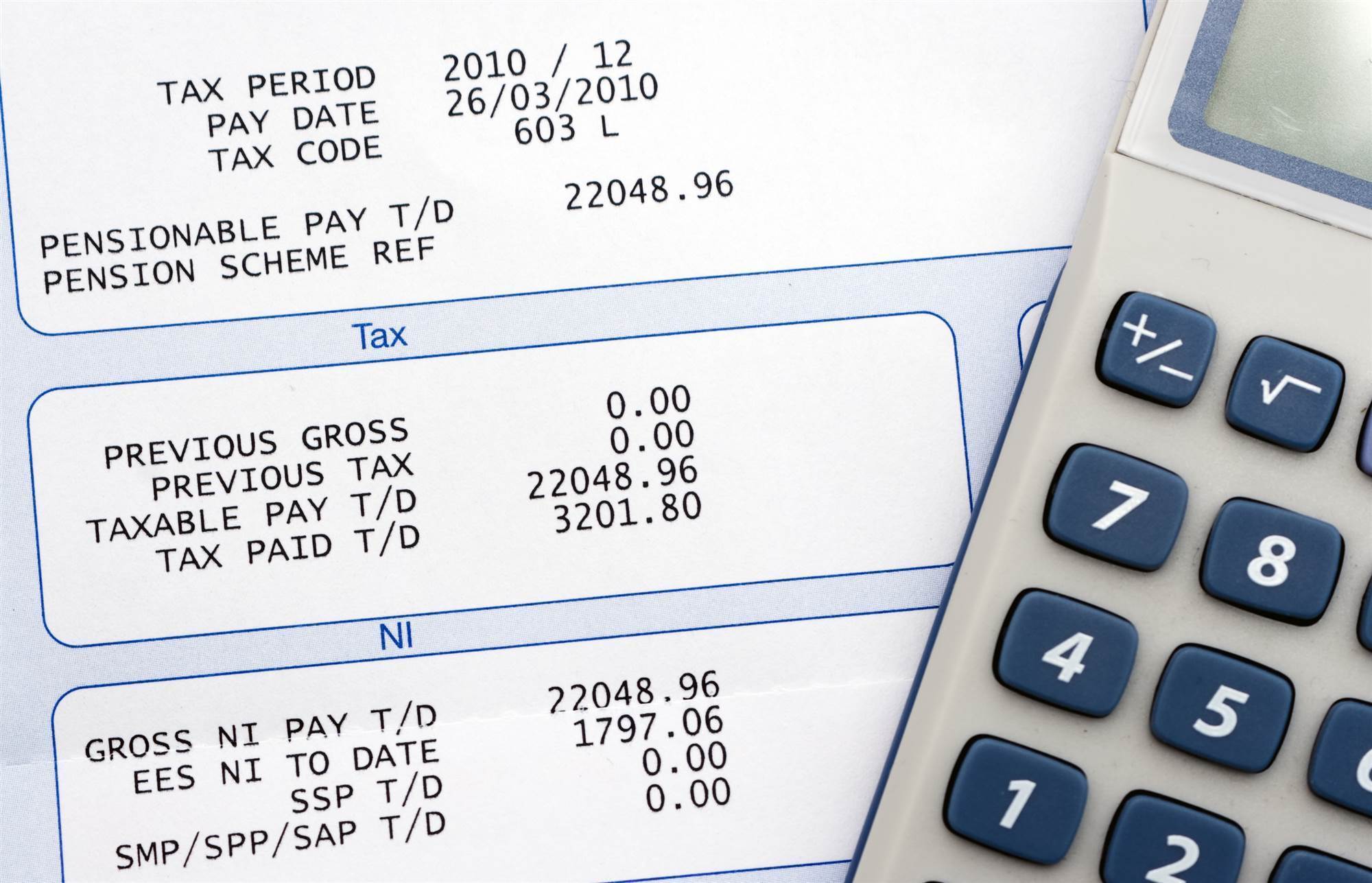
Running payroll in South Africa involves more than simply paying employees — there are strict reporting, withholding, reconciliation, and registration obligations set by SARS (the South African Revenue Service). Noncompliance can lead to administrative penalties, interest charges, and even criminal liability in severe cases. But you can proactively reduce that risk if you follow best practices. This article walks you through key pitfalls, SARS’s penalty regime, and practical steps to stay compliant.
1. Understand the Key Payroll / PAYE Obligations
Before diving into avoidance strategies, it helps to have clarity on what obligations you must comply with:
| Obligation | What It Demands | Key Deadlines / Notes |
|---|---|---|
| Register as an employer | If you have employees, you must register with SARS as an employer and obtain an employer tax reference. | Before you start paying remuneration. |
| Deduct employees’ tax (PAYE) | From each employee’s remuneration, deduct the appropriate tax based on the applicable tax tables. | Deduction happens monthly. |
| Pay over PAYE to SARS | The amounts deducted must be paid into SARS’s bank account (or via acceptable channels). | Within 7 days after the end of the month in which the deduction was made. gb.co.za+1 |
| Submit monthly employer declarations (EMP201) | Declare amounts deducted (PAYE, UIF, SDL etc.). | Monthly, per SARS timelines. |
| Submit annual reconciliation (EMP501) | Reconcile all your monthly declarations and confirm total liabilities vs. deductions. | By 31 October following the relevant payroll year (or as per SARS schedule) South African Revenue Service+1 |
| Issue IRP5 / IT3(a) certificates | Provide employees (or ex-employees) with their certificates of remuneration and deductions. | Within prescribed time after the tax year ends or when employment ceases. South African Revenue Service |
| Maintain proper records and systems | Keep supporting documentation, payroll registers, computation workings, etc. | SARS may audit or request data; proper records are essential. |
| Update SARS of changes | E.g. change of company address, banking details, etc. | Notification must be within 21 days (or per applicable rule). |
If any of these steps are missed, late, or done incorrectly, you expose yourself to penalties and interest.
2. Know SARS’s Penalty & Interest Regime for Payroll / PAYE Noncompliance
To avoid penalties, you need to know how SARS imposes them. Here’s a breakdown of the key penalty exposures for payroll / PAYE:
a) Administrative Penalties: Late EMP501 Reconciliation
One of the most common penalties is for failing to submit the EMP501 reconciliation on time.
- SARS imposes an administrative penalty equal to 1% of the year’s total employees’ tax liability for each full month the EMP501 is late, up to a maximum of 10% (i.e. 10 months) KPMG+2South African Revenue Service+2.
- The penalty is calculated on your total EMP liability (i.e. the aggregate PAYE for the year). KPMG+1
- Once you file the EMP501, penalties stop accruing for subsequent months. fincor.co.za
- At times, SARS may estimate the liability if you have missing returns, then adjust later when actuals are known. KPMG
b) Late / Under-payment of PAYE
- If you fail to pay the deducted employees’ tax by the due date, SARS may impose late-payment penalties and interest. South African Revenue Service+2chconsulting.co.za+2
- SARS may also issue assessments for under-deducted or withheld PAYE. gb.co.za+1
- The employer may be held personally liable under Section 157 of the Tax Administration Act for failing to deduct or pay over employees’ tax. gb.co.za+1
c) Administrative Penalties for Other Noncompliance (Records, Returns, etc.)
- SARS has a broader noncompliance penalty regime under the Tax Administration Act (Section 210), covering failures to submit returns, late returns, missing disclosures, etc. Sable International+2serviproaccounting.co.za+2
- Fixed-amount penalties apply monthly for each outstanding return, based on income bands (ranging generally from R250 to R16,000 per month depending on the taxpayer’s taxable income) Nedbank Personal Banking+3axiaconsulting.co.za+3Thrive CFO+3
- These penalties recur monthly until the non-compliance is remedied, up to a maximum of 35 months (or 47 months if SARS cannot deliver notices due to address issues) Thrive CFO+3South African Revenue Service+3fincor.co.za+3
- Interest is charged on outstanding tax obligations from the original due date until payment (compounded as per SARS policy) chconsulting.co.za+2Thrive CFO+2
d) Understatement Penalties & Criminal Liability
- If you submit incorrect payroll returns or omit taxable benefits or allowances, SARS may impose understatement penalties under Section 222 of the Tax Administration Act. The penalty percentage depends on the degree of negligence or intent. mmsgroup.co.za+1
- In extreme cases, willful or deliberate noncompliance (e.g. deliberately misappropriating PAYE deductions) can attract criminal prosecution, fines, or imprisonment (up to 2 years) South African Revenue Service+2chconsulting.co.za+2
Thus, even small oversights can snowball into significant costs if not managed proactively.
3. Practical Steps to Avoid Payroll Penalties
Now that you understand the risks, here are concrete steps you (or your payroll / finance team) can take to stay penalty-safe.
a) Automate Payroll & Use Reliable Payroll Software
- Use payroll software that is SARS-compliant (i.e. that maintains audit trails, version controls, correct tax tables, benefit/allowance taxation)
- Automate deductions, tax table updates, verification checks (e.g. ensuring that PAYE deducted plus UIF + SDL reconcile with totals)
- Integrate with accounting systems to minimize manual rekeying and errors
b) Plan for Cash Flow & Pay PAYE on Time
- Treat the remittance of PAYE as a top priority in your monthly cash flow planning
- Schedule the payment a few days before the due date to allow for banking delays
- Monitor your bank cut-off times; SARS only considers payments once they reflect in SARS’s bank account by the due date South African Revenue Service+1
c) Always File EMP201 and EMP501 on Time & Accurately
- Maintain a schedule / calendar of all SARS deadlines (monthly EMP201, annual EMP501, IRP5 issue dates)
- Reconcile monthly to detect discrepancies or omissions early
- When submitting the EMP501, check carefully that all underlying EMP201 submissions are correct (so you don’t inherit errors)
- Submit the reconciliation as early as possible — penalties only accrue after full months of delay fincor.co.za+2KPMG+2
d) Reconcile Continuously, Not Only at Year End
- Periodically (e.g. quarterly or semi-annually) reconcile payroll, tax withholding, trust benefits, allowances, and ensure that all differences are corrected early
- Track unusual or one-off payments (bonuses, severance, leave payouts, etc.) to ensure correct tax treatment
e) Maintain Good Record Keeping & Backup Documentation
- Retain payslips, payroll journals, computation worksheets, salary reviews, contract terms, changes to allowances, etc.
- Documents should be stored securely (digitally and/or physically) for at least the statutory retention period
- Ensure that documentation supports any adjustments or corrections in the event of a SARS audit
f) Monitor SARS Correspondence / Portal / eFiling
- Regularly check SARS eFiling / Employer dashboard for alerts, outstanding returns, penalties, or validation issues
- Respond promptly to SARS queries or audit requests
- If you receive a penalty notice, don’t ignore it — address it immediately
g) Stay Up to Date with Legislative / SARS Changes
- Tax rules, benefit taxation, fringe benefit sets, and SARS procedures may change from year to year
- Subscribe to SARS updates or tax newsletters, or employ a tax practitioner who monitors changes
- Update your payroll software (or payroll tax tables) when SARS issues new tax tables, employer guides, or circulars
h) Undertake a Pre-Audit / Internal Review
- Periodically have an internal or external audit of your payroll to catch rogue or noncompliant items
- Spot-check random employees for correctness of deductions, benefits taxed properly, etc.
- Use the review to fix discrepancies before SARS notices
i) If Noncompliance is Detected, Act Immediately
- If you realize a mistake (e.g. under-deduction, late payment, missing reconciliation), don’t wait. Rectify immediately.
- Submit missing returns, pay the owed amounts, file revised schedules — the sooner you fix, the less penalties or interest may mount
- Consider submitting a Request for Remission (RFR) with SARS in valid cases (see next section)
4. Remission, Objections & Dealing with SARS Penalties
Even with best efforts, sometimes penalties may be wrongly imposed or may apply in situations where remission is justified. Here’s what to keep in mind:
a) Request for Remission (RFR)
- SARS allows taxpayers to submit a Request for Remission in certain circumstances when they believe a penalty should be waived wholly or partially. South African Revenue Service+2South African Revenue Service+2
- You must provide detailed reasons and supporting evidence for the noncompliance, and cover each period / amount concerned. South African Revenue Service+1
- Remission is not guaranteed — SARS considers whether the noncompliance was bona fide, isolated, caused by circumstances beyond your control, and whether you acted promptly to remedy. South African Revenue Service+2South African Revenue Service+2
- For fixed amount penalties, remission may be considered in first incidences or short durations (e.g. fewer than five business days) under reasonable grounds. South African Revenue Service
- A remission decision can be objected to; and if objection is disallowed, further appeals may be possible. South African Revenue Service+1
b) Objection / Appeal
- If you disagree with a penalty assessment after SARS’s remission decision, you may lodge an objection using SARS’s prescribed processes (usually via eFiling). South African Revenue Service+1
- If objection fails, you may proceed to appeal as per the rules of the Tax Administration Act. South African Revenue Service+1
- Note: In many cases, you need to first submit the outstanding returns or rectify the noncompliance before you may object or appeal. South African Revenue Service+2South African Revenue Service+2
c) Mitigation Approach
- Engage SARS early (via SARS branch, or with your tax practitioner)
- Provide all supporting evidence, including correspondence, proof of difficulties (e.g. illness, system outage, bank problems)
- If granted remission only partly, still obey the decision and settle the outstanding penalty or tax
- Always maintain compliance going forward — repeat noncompliance undermines future remission chances
5. Example Scenarios & Practical Illustrations
Here are a few illustrative examples to bring the above principles to life:
Example 1: Late EMP501 Submission
- Suppose your company’s total PAYE liability (employees’ tax) for the year was R1,200,000.
- You fail to submit your EMP501 for two full months past the deadline.
- SARS may impose 1% per month = 1% × R1,200,000 = R12,000 per month — thus R24,000 in penalties.
- If you file it before the third month, no further penalty is added beyond the two months.
- However, the longer you delay (up to 10 months), the penalties rise (up to 10% = R120,000) KPMG+1
Example 2: Under-deduction of Allowance
- Suppose the employer fails to deduct employees’ tax on a housing allowance of R2,000 per month (total of R24,000 over the year).
- SARS may issue an additional assessment and hold the employer personally liable, and compute the taxable benefit (gross up) to assess the correct tax owing. South African Revenue Service+1
- The employer can recover from the employee only if authorised by SARS, and only after compliance. gb.co.za
Example 3: Penalty Remission Granted for First Instance
- Imagine that due to a bank systems outage, your payment failed on the due date (first incidence ever).
- You immediately discovered the issue, contacted SARS, and paid the tax late but within a few days.
- You submit a Request for Remission, explaining the circumstances and showing proof of bank outage.
- SARS may consider waiving the penalty (or part thereof) if it finds your reasons reasonable. South African Revenue Service+1
6. Summary Checklist to Avoid SARS Payroll Penalties
Use this as a quick operational checklist:
- ✅ Register as an employer and maintain valid SARS employer status
- ✅ Deduct correct PAYE each month using updated tax tables
- ✅ Pay over PAYE on time (within 7 days post month)
- ✅ File monthly EMP201 declarations accurately and timely
- ✅ Perform periodic reconciliations to detect anomalies
- ✅ File annual EMP501 reconciliation early and correctly
- ✅ Issue IRP5 / IT3(a) certificates timely
- ✅ Keep detailed payroll and tax records and back them up
- ✅ Monitor SARS eFiling portal, dashboards, and correspondence
- ✅ Stay abreast of SARS legislative / procedural updates
- ✅ If an error or lapse is detected, remedy immediately (file, pay, correct)
- ✅ If penalised, submit Request for Remission; if needed, lodge objection/appeal
Final Thoughts
Avoiding payroll penalties from SARS is largely about discipline, timely execution, reliable systems, and responsiveness. The penalties are designed to be punitive — they rise with delay and noncooperation. But if you build strong internal controls, stay alert to deadlines, and act swiftly to remedy any oversight, you’ll greatly reduce your risk.